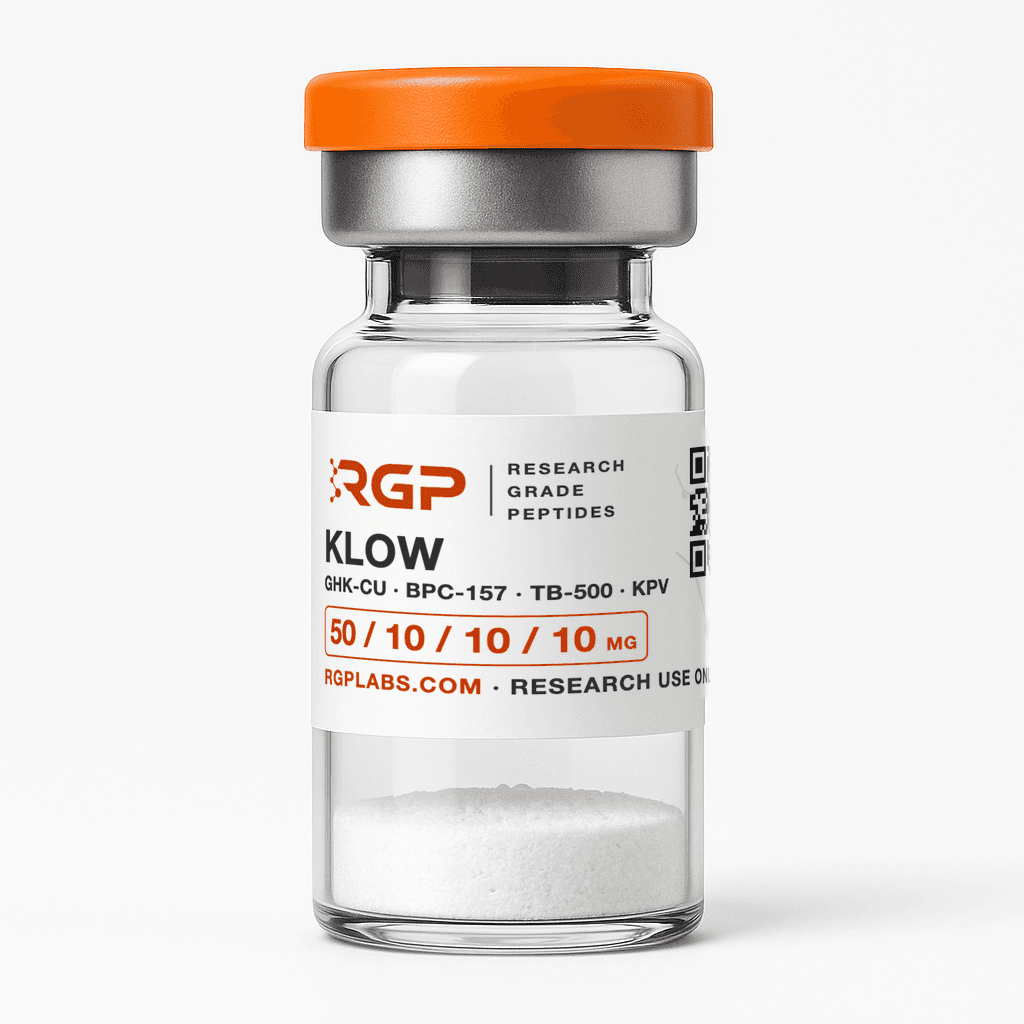
Klow
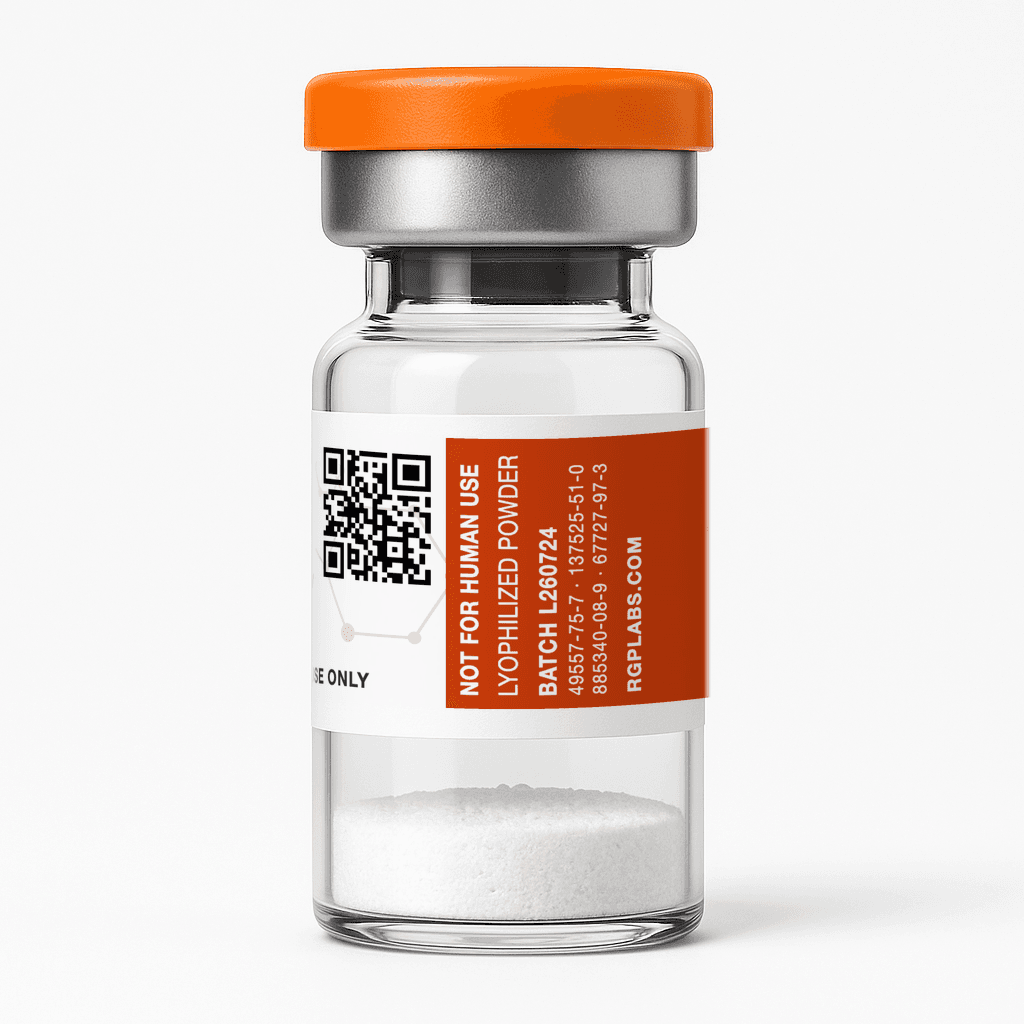
CAS 49557-75-7; 137525-51-0; 885340-08-9; 67727-97-3$135.00
- Crypto: save 10%
- Venmo: save 5%
- Zelle: save 5%
- Cash App: save 5%
A GHK-Cu, BPC-157, TB-500, and KPV blend studied for skin, repair, and anti-inflammatory research.
- Ships fast from the US
- Batch number on every vial
- ≥99% HPLC purity target
Before ordering
- For laboratory research use only — not for human or veterinary use.
- Every vial carries a batch number (see Batch Information below).
- Read the Shipping Policy and Refund Policy before ordering.
Research Overview
The four-peptide 'repair stack' — component science real, blend science absent
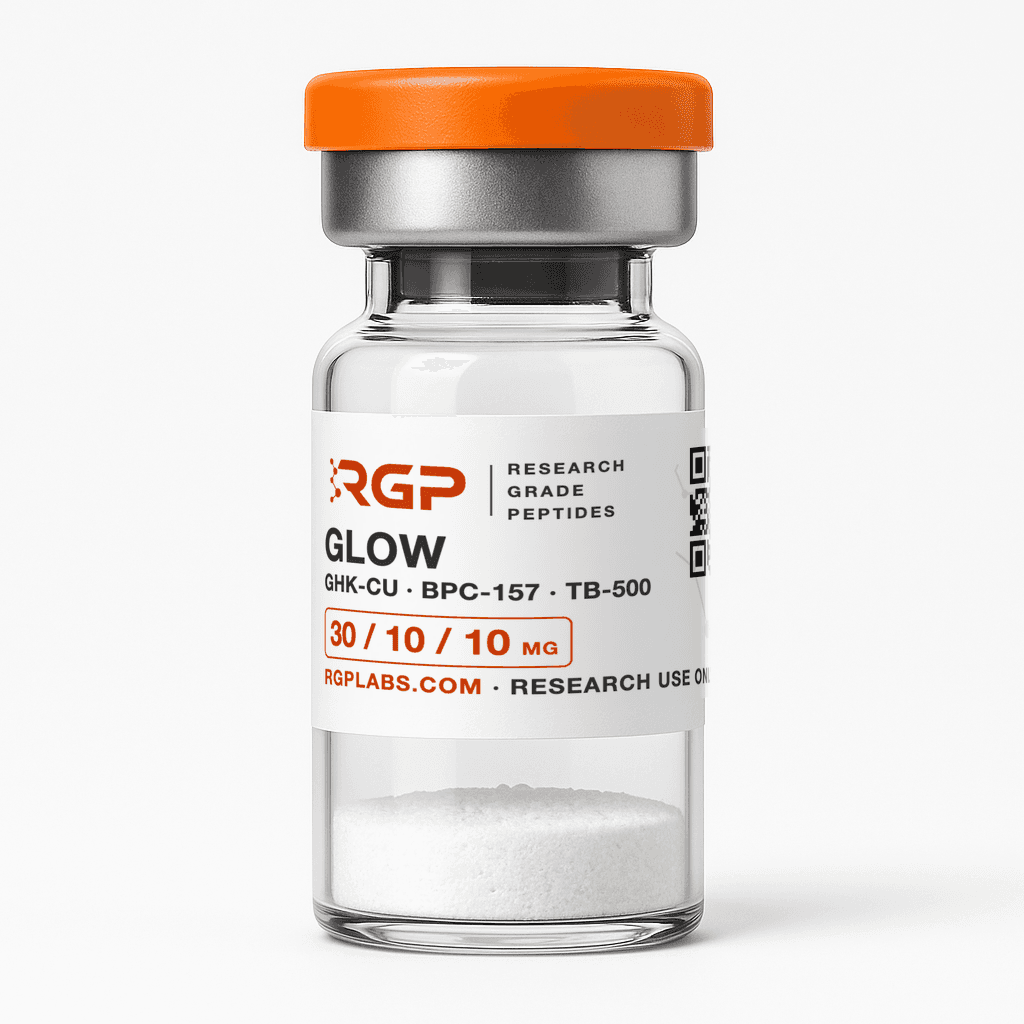
KLOW is not a single molecule but a fixed-ratio blend of four peptides that dominate the tissue-repair conversation: copper-binding GHK-Cu, the gastric pentadecapeptide BPC-157, the thymosin-β4 fragment TB-500, and the anti-inflammatory tripeptide KPV. Each component has its own preclinical literature pointing at a different piece of the repair process — matrix remodeling, cytoprotection, cell migration, and inflammation control. The blend itself is a community invention: the combination has never been studied together.
GHK-Cu — skin & matrix remodeling
Preclinical (cell & animal)The blend's dominant component by mass. GHK-Cu is a naturally occurring copper-binding tripeptide shown in laboratory models to stimulate collagen and glycosaminoglycan synthesis, modulate metalloproteinases, and shift gene expression toward regeneration — the backbone of its long history in skin-repair research.
BPC-157 — cytoprotection & soft-tissue repair
Preclinical (cell & animal)In rodent injury models spanning tendon, ligament, muscle, and gut, BPC-157 has been repeatedly associated with faster, more organized healing, with in vitro work pointing to enhanced fibroblast migration and VEGFR2-linked angiogenesis. No human RCTs exist.
TB-500 — actin regulation & cell migration
Early human trialsTB-500 is the synthetic fragment of thymosin β4, the body's main actin-sequestering peptide. Tβ4 promoted cell migration and wound repair in preclinical models and — unusually for this space — has been through early human wound-healing trials.
KPV — inflammation control
Preclinical (cell & animal)KPV is the C-terminal tripeptide of α-MSH and appears to carry much of the parent hormone's anti-inflammatory activity without its pigmentation signaling. In cell and rodent colitis models, KPV taken up via the PepT1 transporter reduced NF-κB activation and inflammatory cytokine output.
There are no published studies of the KLOW combination itself — not the four-way blend, not the ratio. Every claim about the blend is an extrapolation from single-compound studies.
Technical Specifications
- CAS Number
- 49557-75-7; 137525-51-0; 885340-08-9; 67727-97-3
- Composition
- GHK-Cu 50 mg · BPC-157 10 mg · TB-500 10 mg · KPV 10 mg
- Purity Target
- ≥99% (HPLC)
- Appearance
- White lyophilized powder
- Vial Size
- 50 / 10 / 10 / 10 mg
- Solubility
- Soluble in bacteriostatic water and sterile water.
- Storage
- Lyophilized: store at -20 C, protected from light. Reconstituted: 2-8 C, use within 28 days.
- Handling
- For laboratory research use only. Handle aseptically and avoid repeated freeze-thaw cycles.
Why RGP
We're deliberately not the cheapest vial on the market. Every batch is manufactured to a ≥99% HPLC purity target, batch-tracked from manufacture to your bench, and shipped fast from the US with full specifications on record. Independent third-party testing is underway — results will be published here as they come in.